The new LPMS CURS2 sensor
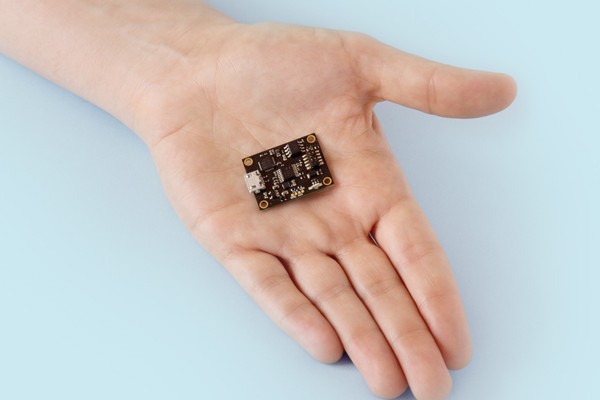
We proudly launched the next generation of our LPMS inertial measurement units developed for fast and accurate 3D orientation sensing. LP-RESEARCH supports a variety of communication interfaces and housing options at low cost. Let us tell you more about the optimized features:
- The new sensors are roughly half the size of the previous production, especially if you take a look at the new LPMS-B2.
- Performance has been greatly increased in terms of accuracy. The noise level is now one third of the previous version.
- Higher sampling rate: We were able to bring the sampling rate up to 400Hz.
- The new sensors feature more types of data output, for example humidity.
- Both LPMS-CANAL2 and LPMS-RS232AL2 are encased in a rugged aluminum housing and are waterproof up to 1m (IP67).
- The first generation comprised seven sensors, now we increased the line to nine with greater variety.
- Finally, thanks to a different manufacturing process, our new generation cost half or even less than half the price of the previous version.
Have a look at our LPMS product site over here.

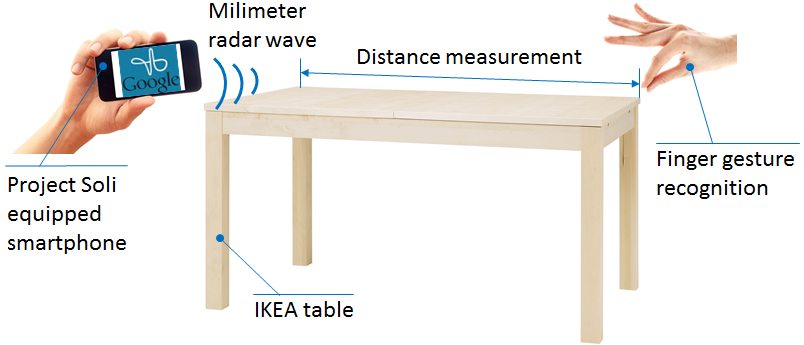
The folks at Google ATAP were so nice and allowed us to participate in the Project Soli alpha developer program. Please have a look at their website for more information about the project. Project Soli is a chip-sized miniature millimeter-wave radar, supported by a sophisticated DSP pipeline developed by Google. Based on this signal processing, it is possible to analyze and evaluate finger gestures in the vicinity of the sensor. This allows for new ways of human-device interaction.
We have spent some time with the developer kit and made an application called Virtual Tape Measure. Purpose of this demo application is to replace the need for a physical tape measure when e.g. checking the dimensions of table while shopping for furniture. This is a fairly simple application of the Soli technology. We are currently looking into further, more complex use cases. Please see the diagram below describing the basic functionality of the system.


In order to test the functionality of our sensor fusion algorithm for head-mounted-display pose estimation, we connected one of our IMUs (LPMS-CURS2), a Nexonar infrared (IR) beacon and a LCD display to a Baofeng headset. The high stability of the IR tracking and the orientation information from the IMU as input to the sensor fusion algorithm result in accurate, robust and reactive headtracking. See the figure below for details of the test setup. The video shows the resulting performance of the system.