Blog

LpGlass and Head Tracking Revisited

We had the opportunity to try out one of the new augmented reality glasses AiRScouter produced by the Japanese company Brother. We first tried one at a Brother product exhibition here in Tokyo. Although the glasses are a little heavier than normal glasses, they fit quite well and the overlay image is well visible.

We experimented with the glasses a bit and set-up a prototype application for augmented reality using our LPMS-B sensor for head tracking, codename: LpGlass. The video below shows a demo of our LPMS-B IMU attached to the AiRScouter.

Similar to the Google glasses there seem to be a huge number of applications, especially for augmenting task environments for medical procedures, industrial assembly, education etc.
video

Rugged IMU Aluminium Case: LPMS-CU Housing Option

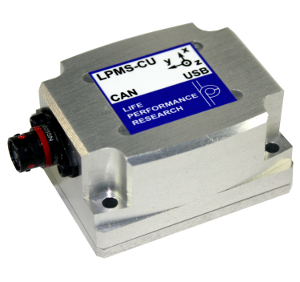
So far we have offered our customers only one packing option for the LPMS-CU, our standard blue plastic casing. The plastic case is small, very light and fairly robust. However, in harsh environments or in places that engineers regularly access with larger tools, we thought that a more rugged case for the LPMS-CU might be desireable. Therefore we have designed a new Aluminium casing option for LPMS-CU: the LPMS-CU-Rugged. Customers can from now on order this casing as an option when purchasing the LPMS-CU. The case is slightly larger and heavier than the plastic case, but made from 2mm Aluminium, it is almost indestructable.

Magnetic Field Calibration Data: Visualization & IMU Yaw

One of the trickiest things for reliably measuring orientations with the LPMS is the calibration of the magnetic field sensor. The functionality of the sensor is essential for determining the yaw angle of the sensor without drift. If we used only the gyrsocope to measure the yaw angle a drift of a few angles would already occur after 10 or 20 seconds of movement.

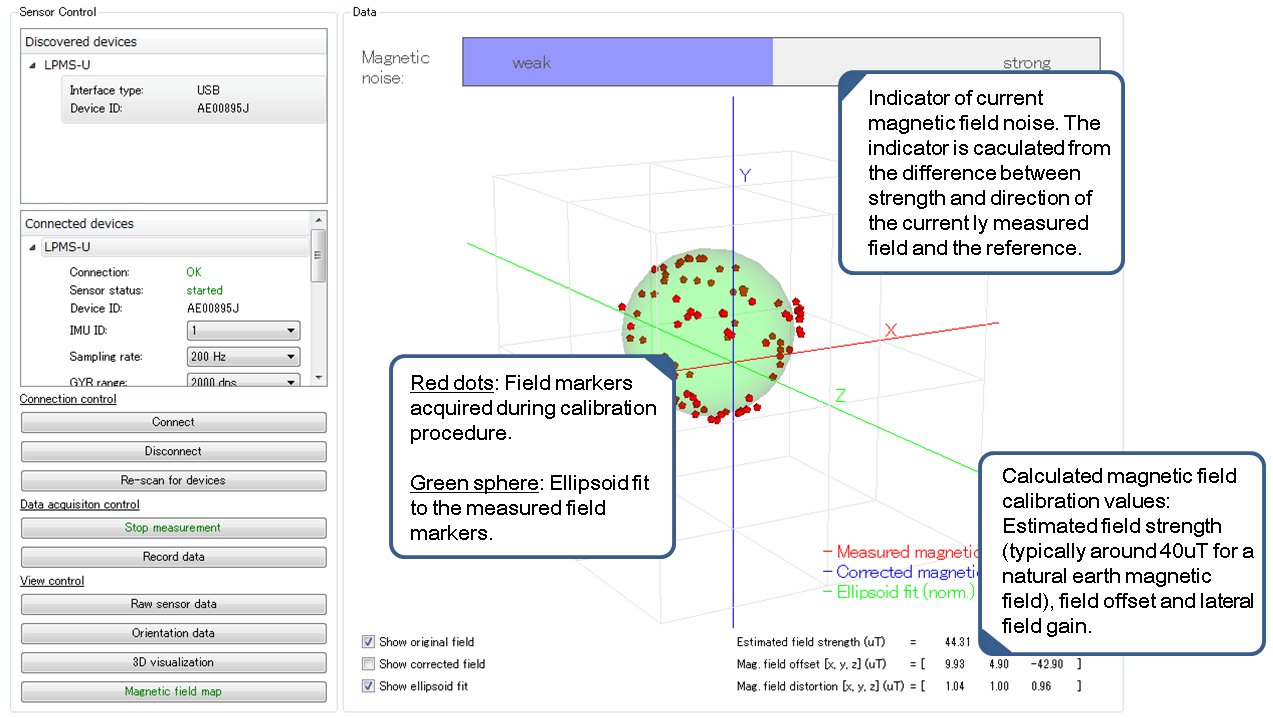
The normally spherical shape of the environment magnetic field is, especially in the vicinity of metal or electric circuits, often distorted to an ellipsoid. Such distoritions are efficiently compensated by calibrating the LPMS. However it is hard for the user to see if the calibration was successful or what the resulting data means about the surrounding electromagnetic field. Therefore we added a visualization of this data to the control software of the sensor (LpmsControl) that is to give a better understanding of the calibration results (see image below).

We use a special algorithm to reduce the influence of a distorted magnetic environment field on the orientation measurements of the sensor. A comparison of orientation tracking without and with using this algorithm is shown below.

video

Your cart

Subtotal$0.00
Tax + shipping calculated at checkout.

Page history

Asset library